- Inclusion
- International
- Partenariats
Conférence sur la polarisation politique et le débat civilisé (University of Utah)
-
Le 12 mars 2026Campus TertreFaculté des Langues et Cultures Étrangères - salle 506 (1er étage)false false
Dans le cadre du partenariat et du programme d’échanges entre l’University of Utah (USA) et Nantes Université, la Faculté des Langues et Cultures Étrangères reçoit la visite de collègues de l’University of Utah et vous invite à une présentation de leurs travaux sur la polarisation politique et le débat civilisé (civil discourse). Les présentations se feront en anglais.
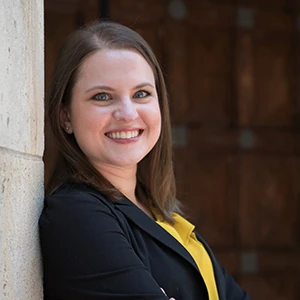 Samantha Moore-Berg (Assistant Professor – Social Psychology) : Meta-Perceptions Drive Us Apart, But Correcting Them Can Bring Us Together
Intergroup conflict is a defining challenge of our time, affecting societies across every region of the world. To build more peaceful and resilient societies, we must better understand the psychological processes that fuel these divisions. One powerful but often overlooked psychological mechanism is meta-perceptions, or our beliefs about what other groups think about us and our shared realities. Across countries and contexts, people frequently overestimate how much the opposing groups dislike, dehumanize or fundamentally disagree with them. These misperceptions can intensify fear, mistrust, and support for exclusionary or even anti-democratic actions. In my talk, I provide cross-context evidence showing that exaggerated negative meta-perceptions are strongly linked to support for limiting the rights of opposing groups, endorsing political aggression, and weakening democratic principles. Importantly, I also share findings that these divisions are not inevitable. When individuals are exposed to well-designed media interventions that reveal how much common ground and mutual recognition actually exists between groups, misperceptions decline. As a result, support for violence, anti-democratic attitudes, and intergroup hostility decreases. By identifying and correcting meta-perceptions, we can reduce polarization and strengthen democratic norms.
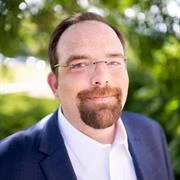 Michael K. Middleton, Ph.D (Senior Associate Dean – Liberal Arts & Sciences, Professor – Communication) : Learning to Disagree Better: Preliminary Results from the University of Utah's Debate Across the Curriculum Initiative
Polarization and declining civic discourse are not merely political problems — they are pedagogical ones. As students increasingly self-censor in classrooms out of fear of conflict, higher education faces a pressing question: how do we equip students with the skills to engage productively across difference? One promising but underutilized approach is debate pedagogy — the structured, facilitated practice of constructing and contesting arguments across positions. Research shows that debate fosters intellectual humility, reduces verbal aggression, and builds willingness to engage opposing viewpoints. Yet it has rarely been integrated into undergraduate curricula at scale. In my talk, I present preliminary results from the University of Utah's Debate Across the Curriculum initiative, which embedded facilitated debates into 23 classes across five colleges, reaching 977 students in Fall 2025. Participants showed increased comfort engaging peers with opposing views, greater perceptions of common ground, reduced anticipated stress around political conversations, and more willingness to speak openly on campus. Importantly, these gains were achieved in a single class period with minimal faculty burden — suggesting debate pedagogy offers a scalable, evidence-based model for rebuilding the civic capacities that polarization erodes.